Differences between products and services

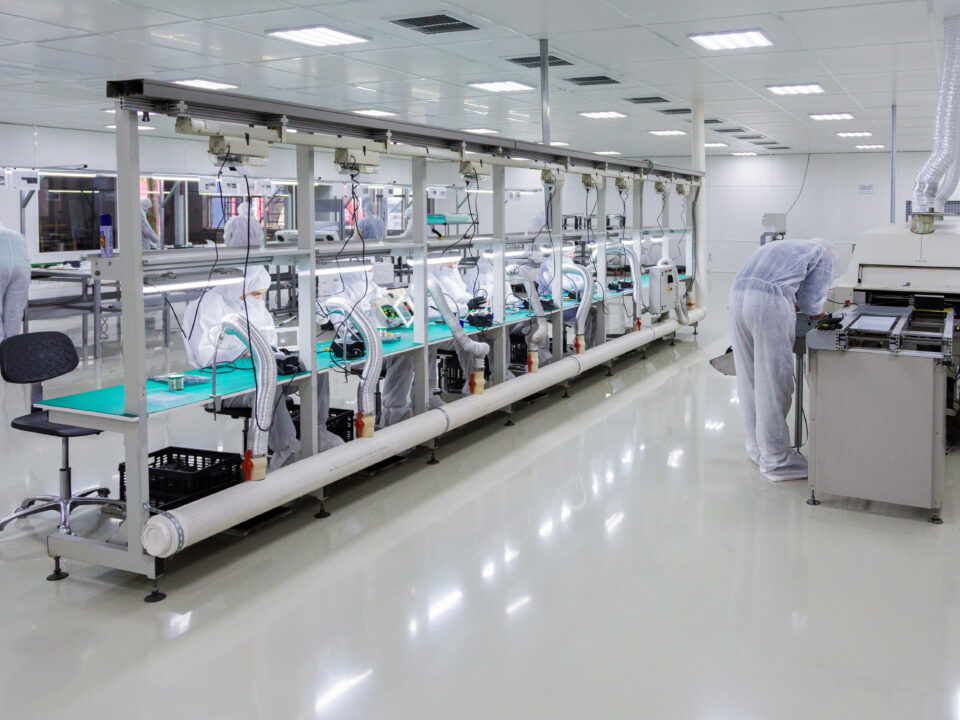
What are the main differences between products and services? From the perspective of operations management, the differences between service provision and product manufacturing lie in the fact that the former is an intangible process, while the latter is the physical outcome of a process.
Other differences include that in services, the location of facilities and direct customer involvement in the creation of the outcome are essential factors, whereas in the production of goods they are not. Many service companies manufacture the physical products they deliver to their customers or consume goods while creating the service.
Main differences between products and services in the production systems
What is a production system?
A production system utilizes operational resources to transform inputs into some desired outcome. Inputs can be raw materials, customers, or finished products from another system.
Operational resources can be characterized using the five Ps of operations management: people, plants, parts, processes, and planning and control systems.
On one hand, people constitute the direct and indirect workforce. On the other hand, plants encompass the factories or service branches where production takes place. Parts include materials (or in the case of services, supplies) that pass through the system.
Finally, processes encompass the equipment and steps through which production is carried out. Planning and control systems are the procedures and information used by management to operate the system and manage quality. Transformations that occur include:
Physical transformations, as in manufacturing.
Location transformations, as in transportation.
Exchange transformations, as in retail trade.
Storage transformations in warehouses.
Informational transformations, as in telecommunications.
What differences exist between service and product production systems?
McDonald’s manufactures a tangible product, but because the company is designed to have some interaction with the customer to complete the service production process, it is classified in the service category. Similarly, from an operations perspective, customers are in the “plant” when consuming such services. That is to say, the plant could be called an office, restaurant area, operating room, or passenger cabin, depending on the industry. Additionally, there are many activities that are performed and have tangible inputs and outputs. For example, major airlines, banks, and insurance companies have support offices for customer contact operations; these support office operations process items and information, so they can be managed very similarly to a factory.
| Products | Services |
|---|---|
| Tangible | Intangible and perishable, consumed in the process of their production |
| Can be produced and placed in inventory | Availability based on keeping the production system open to supply the services |
| Minimal contact with the end consumer | High contact with customers or consumers |
| Complex and interrelated processing | Processing is simple |
| Demand varies on a weekly, monthly, seasonal basis | Demand varies on an hourly, daily, and weekly basis |
| Markets served are regional, national, and international | Markets served are local |
| Large units can take advantage of economies of scale | Relatively small units to serve local markets |
| System location is related to regional, national, and international markets | Location depends on the location of local consumers, customers, and users |